Showing posts with label wine pairing. Show all posts

Is Fruit Cake just for the holidays?


I received an email a number of weeks back, asking if I would be interested in writing a follow-up blog about fruit cake. Back in 2013, I had written a post about the history of Fruit cake, and what I felt might be some good wine pairings. That post was seen by the owners of Jane Parker Fruit Cakes. They offered to send me a fruit cake if I would write an honest opinion of their cakes and share some pairing ideas. A few weeks later, I received a fruit cake in the mail, along with a few small sample packs. This got the ideas flowing, the following is the results of those ideas.

First, let me say that I am one of those that appreciates good fruit cake. The Jane Parker Classic light fruit cake I received was dense, moist, and packed with raisins glace cherries, glace pineapple, and topped with pecans. There was a large ratio of fruit to cake. This wasn’t an overly spiced cake. I would say it had a slight amount of nutmeg.


 In an effort to be unbiased in my review of the Jane Parker fruit cake, I invited four couples to join my wife and me for a Charcuterie platter and numerous wines. The idea was to let everyone experiment with different meats, cheeses and wines, then formulate their own opinion on what works. I also wanted to break the stereotype of fruit cake only being for the holidays (so why not add it to a charcuterie plate?). I sliced half of the fruit cake and added it to my charcuterie plate. We had about a dozen wines to try, and everyone had numerous wine glasses, to try multiple pairings at a time.

The wines I included, were based on my suggestions from my previous blog about fruit cake. They included: German Spatlese Riesling, Alsace Gewurztraminer, Dry Rose Sparkling wine, Beaujolais from Brouilly (gamay), Italian Dolcetto, Lodi Old Vine Zinfandel (very “jammy”), French Muscat de St Jean, and Tawny Port. Our guests brought some additional wines and a Lambic beer: German Liebfraumilch, California Grenache, and Framboise Lambic, plus additional Rieslings from California and Germany.


 The Charcuterie plate included: 4 cheeses (Wensleydale, Ridder, Smokin Goat, and Mascarpone), 3 meats (Iberico ham, Sweet Sopressata, and Genoa Salami). For our vegetarian guests, I included vegan pepperoni, vegan smoked chorizo, and a tomato & basil Pâté. We also had four different types of crackers and cheese sticks, dried and fresh fruit, nuts, seeds, quince paste, fig jam, apple calvados jam, cheese stuffed sweet peppers, as well as mustard and aioli.

Out of the ten people attending the tasting, three of us had food industry backgrounds, and three admitted to not really liking fruit cake, and shared the typical jokes about fruit cake. By the end of the night, everyone agreed that the Jane Parker fruit cake was very good, and agreed that it can be a versatile addition to any gathering, if paired properly. Two comments at the end of the night were, “send more cake, we need to do more experimentation” and “this made a fruit cake believer out of me!”

So, what worked?

I had originally planned the charcuterie plate with items I thought would work with the fruit cake. The sweetness of the cake should work with salty, so the Iberico ham, and Wensleydale cheese were expected to work….and they did. But it was the items that were unexpected that really got everyone exploring. The surprise of the night was fruit cake paired with the sweet sopressata (sweet vs salty) and probably the best pairing of the night was fruit cake with Ridder cheese and German Riesling (everything just came together on this one). I had thought the tomato and basil pate might work with the fruit cake, and it should have, but the pate needed more salt. In hindsight, I could have added some finishing salt to the pate. The Iberico ham worked perfectly with the fruit cake, and even better when a slight spread of mascarpone cheese was added.

At the very end, I served the Jane Parker fruit cake by itself, and we tried some wine pairings. We found some that were very good. Riesling was the all-around favorite, but Moscato, Liebfraumilch and the Framboise Lambic beer were also excellent pairings. The Gewurztraminer was interesting, as it pulled out the nutmeg flavors in the fruit cake. The Old Vine Zinfandel had just enough fruitiness to work with the cherries and raisins in the fruit cake. Two wines that didn’t work at all with the fruit cake were the Sparkling Rose and the Tawny Port (maybe with a darker style, or chocolate fruit cake). When serving sweet items, always try to keep our beverage slightly sweeter.


Lastly, we discussed other ideas for using fruit cake during the year (and not just the holidays). Ideas included toasted fruit cake with cream cheese, deep fried fruit cake, and my personal favorite is to use it as a stuffing, by cutting it into chunks to be added to a stuffing/side dish for Pork or Duck.


My unbiased opinion...Jane Parker makes a really nice fruit cake that reminds me of cakes I had as a kid. Fruit cake can be incorporated into a dinner party, wine tasting, or any event, as long as you include items that will pair with the sweetness of the fruit cake.

It was a fun experiment, and one of our guests texted me the next morning saying. “We can’t stop remarking how much we enjoyed last night! Thank you so much for a remarkable evening”. Mission complete!

Now we need to try this again with other Jane Parker cakes.

Wine Dinner Takeover


Richard Krumweide, Jim, Nytasha Mealer, Elizabeth Krumweide
What happens when a winemaker, a chef, and a venue, which was once reputedly owned by Bugsy Siegel, come together? Of course, the answer is a 6-course wine pairing dinner.

I have known the winemaker, Richard Krumweide for years. He and his wife, Elizabeth, own the recently bonded Sycamore Ranch Vineyard &Winery. They are located in Dart Canyon, high up on the San Bernardino Mountains, in the town of Crestline. They are one of the highest altitude wineries in California. Sitting on 3.5 acres, they produce Zinfandel, Syrah and Hard Cider from their own vineyards and orchards. The remaining grape varieties are sourced from the Central Coast, and Sierra Foothills. All wines are produced at the winery. As an amateur winemaker, their wines have been winning numerous awards at tasting events throughout California. The first vintages for sale to the public will be the 2015 vintage. Since this event was a private dinner for Arrowhead Wine Enthusiast members, we were happy to help rid them of some of their older vintages.

I met Chef Nytasha Mealer at Sycamore Ranch Vineyards. She currently runs an organic food market in the town of Crestline, but has an extensive cooking background, which has her catering numerous events. She went to culinary school at Le Cordon Bleu, and has cooked with Bobby Flay, and Wolfgang Puck. She was the chef of Fig and Olive in Los Angeles. Needless to say, she has some “street cred”.

The Tudor House had approached us, and asked if our wine club would be interested in creating a wine pairing dinner. We agreed to do the dinner, as long as we could “takeover” their kitchen with Nytasha creating the menu, their staff doing the serving, and Sycamore Ranch providing the wine and cider for each course. Nytasha and I met at Sycamore Ranch, and had the “painful” job (someone has to do it) of tasting numerous Sycamore Ranch wines, along with Richard and Elizabeth. For over two hours, we tasted, and share our tasting notes, and ideas for what would pair best with each wine. Nytahsa took most of the notes, and used those to pick which wines to pair, and ultimately create the wine pairing meal that follows.

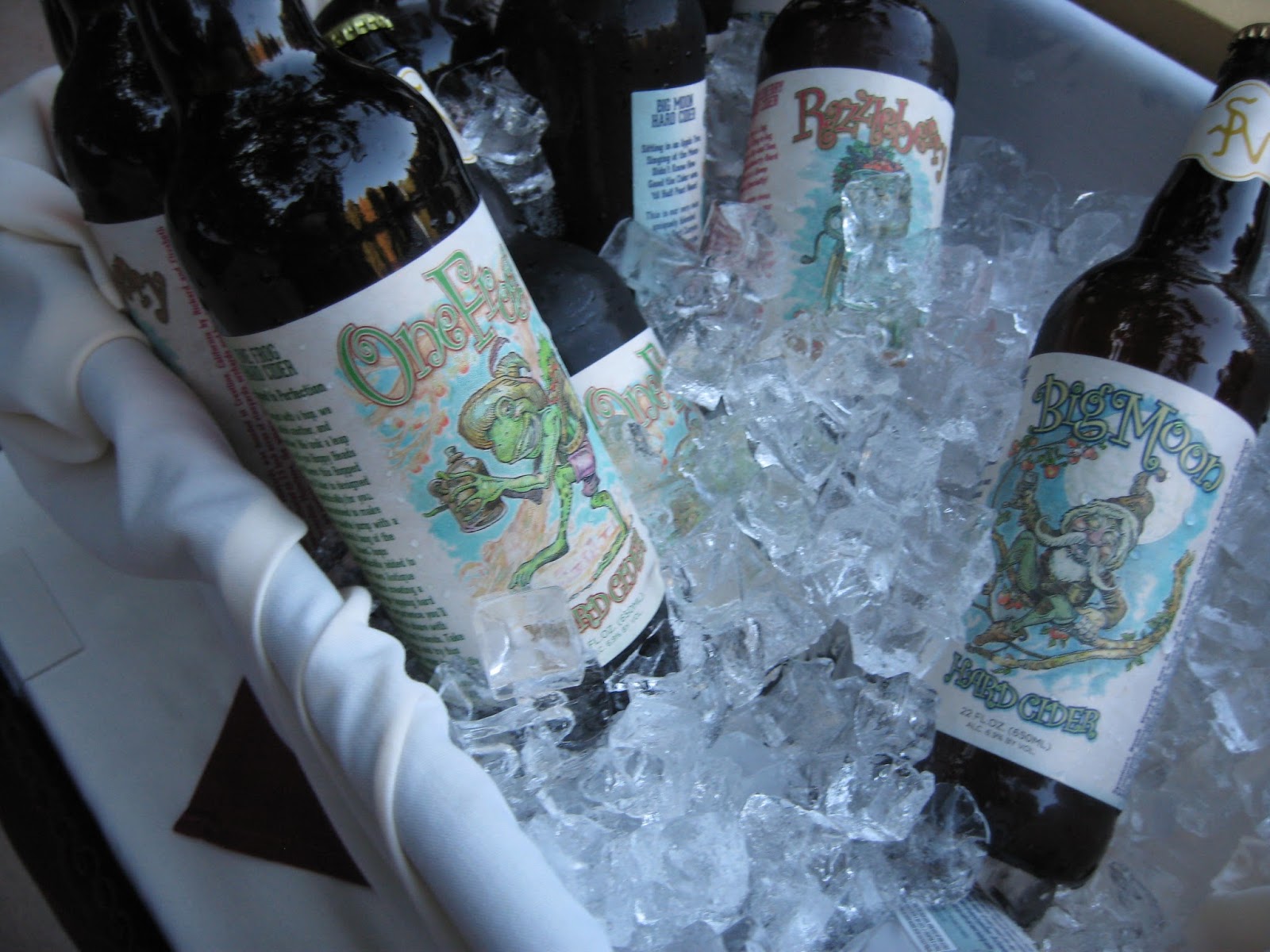
At 6:30, on the evening of the dinner, we gathered outside the Tudor House for the Amuse-Bouche. This course was a delicately seared albacore and red snapper tataki, enveloped around baby herbs atop handmade wonton drizzled in a kumquat ponzu, finished with flavored tobiko. This was paired with the Big Moon Hard Apple Cider. This was one of my favorite pairings of the evening, and a great way to start things off. The kumquat ponzu really worked well with the tartness of the apple cider. The effervescence of the cider awakened the palate, and prepared us for the coming courses.

We next moved inside. The historic Tudor House was set for four couples at each table. A large screen above the performance stage, had a slide show highlighting Sycamore Ranch. We had a small crowd of only about 45 people, but that wasn’t too bad, considering the entire event was put together in less than three weeks.

Our first sit down course was “brown butter pan-seared scallops, fixed upon a Meyer lemon Marcona almond pesto, dotted with cilantro coulis and feathered parsnip chips”. This was paired with the 2014 Sycamore Ranch Rousanne. This white wine has a certain richness to it, with honey and pear notes. The acidity of the wine was matched with the acidity of the Meyer lemon pesto. The pesto itself was not only Meyer lemon, but Marcona almonds. This added a richness that mirrored the wine.

The next course was “roasted organic raised quail and golden beet salad on a bed of wilted tatsoi, graciously dressed with raspberry white balsamic vinaigrette”. This was paired with the 2014 Sycamore Ranch Grenache.  This is a very nice Grenache, with notes of raspberry, strawberry, cherry and white pepper. For many, this was their favorite pairing of the evening. I am not a big beet fan, so for me, they over-powered the wine.

The third course (or fourth depending on how you count) was a Moroccan carrot ginger veloute, dolloped with crème fraiche”. This was my favorite pairing of the evening, being served with the 2014 Sycamore Ranch Rhone Ranger. When a pairing comes together, the food changes the taste of the wine, pulling out flavor notes that weren’t there without the food. This course did that. The ginger and carrot greens made the fruit pop in this wine. For me, this was the best pairing of the night.

After a palate cleanser of apricot lemon sorbet, we moved on to the main course of a “richly marinated, then flash seared venison tenderloin, nested against a forest mushroom risotto, aged parmesan Reggiano, bathed in a luxurious fig and wine reduction”. This course was served with the 2013 Sycamore Ranch Cabernet Sauvignon. What can I say? Cabernet and venison…they just go together. Add to that Parmesan and figs, and you have a rich course.

We ended the evening with “the deepest darkest Belgium flourless chocolate cake, draped in a violet lavender ganache”. This was paired with the 2014 Sycamore Ranch Primitivo.  This was a challenging pairing. Since Sycamore Ranch does not make a dessert wine, and we needed to end the evening with a dessert…the options were limited. The Primitivo is probably their most fruit forward wine variety, but it is not sweet. In this case, the dessert was sweet, and made the wine seem a bit flat. The ganache, with its’ flowery notes did play off similar notes in the wine. Individually, both were delicious.

This was a fun evening of experimenting with wine and food. Learning what works and what doesn’t, and to see how a chef interprets the wine, to create an experience for the participants. At the end of the evening, the owner of the Tudor House was encouraged to try this again, and I made some recommendations of wineries to try. That means more wine pairing notes in the future.

Wine Pairing Dinner - Valentine's Day


Okay, so I know that is has been a while since I have written. I will be able to explain soon, but for now, let’s just say I have been pretty busy on a big project.

Kumomotos on the half shell
Last weekend was Valentine’s Day, and like most of you, that involves flowers, chocolate, cards and a nice dinner. I find that most restaurants book up well in advance, and it is usually very crowded. This year, our group of friends decided we could do a very nice, gourmet dinner that hit all the key points of decadence, aphrodisiacs and fine wine. What follows is a 4-course meal and the wines I chose to pair with those courses.

Bacon wrapped dates
Our first course was an appetizer course of stuffed dates, wrapped in bacon. My “go to” for bacon is sparkling wine. I like how the bubbles cut the fat and grease, cleansing the palate. The dates add sweetness to the bacon, but I didn’t want to start our meal with a sweet wine. Instead, I went with a Blanc de Noir (made from more fruit forward red grapes). The wine of choice was from Schramsberg, in Napa Valley.

Oysters Rockefeller
Our second course was also an appetizer. We had oysters two ways: on the half shell and Oysters Rockefeller. Oysters are basically just little salt water exchangers, with a minerally taste to them. There are a number of classic pairings for oysters, but my "go to" is from the Loire region of France. In the coastal region of Nantes, the wines produced from the Muscadet grape mirror the brine and mineral of the oysters, but add the sharp acidity that is similar to a squeeze of lemon. The wine for this pairing was Chateau du Jaunay Muscadet Sevre et Maine.

Beef Wellington with Roasted Garlic Potatoes
Our main course was a traditional Beef Wellington. This classic English dish involves coating a tenderloin with pâté and finely chopped mushrooms, then wrapping everything in puff pastry. Since the English were (are) such big fans of French Bordeaux, the classic pairing would be a right bank Bordeaux (St. Emilion or Pomerol). These wines are mostly Merlot based. But, to complicate things, our side dishes consisted of roasted asparagus with garlic and Parmesan, as well as roasted garlic potatoes. First, asparagus makes wine taste sweeter, and garlic clashes with heavily oaked wines (think of how well garlic goes with vanilla or coconut – some of the notes that oak adds). For the wine choices, I did stick with a traditional pairing, with a bottle of 2005 Chateau Fonroque St. Emilion Grand Cru. I also had a bottle of 2012 DomaineSerene Pinot Noir Evenstad Reserve. I find that the Oregon wines are not as fruit forward as some of the California Pinot Noirs, and not as earthy as the French Burgundies. Of the two wines, I felt the Domaine Serene was the better pairing. Our hosts also opened a bottle of Calcareous Pinot Noir…heck two bottles with the main course just isn’t enough for eight people!

For our final course, we ended the evening with a Chocolate Ganache Cake. With sweet desserts, you always want your wine to be sweeter than the dessert. Despite popular belief, chocolate and wine are not natural pairings, but there are some that work well. If you are using milk chocolate, there is only one wine that I find works, and that is Brachetto d’Aqui from Italy. This is a semi-sparkling wine, with aromas of raspberries… a magical pairing with sweeter chocolate. In this case, I did not know if the cake was made sweet, or used bitter sweet chocolate, so I hedged my bets. I brought a bottle of Rinaldi Brachetto d’Aqui, along with a bottle Domaine de Paulilles Banyuls Rimage. This wine from the southern part of France, has aromas of cherries, raspberries and chocolate. It is a fortified wine, similar to Port, but with a bit lower alcohol level. As it turned out, the cake was made using a bittersweet chocolate, so the Banyuls was the best pairing.

The night progressed, and our hosts opened up a few more bottles of dessert wines that they had acquired on recent trips to Paso Robles.


As always, I hope these pairings will inspire you to try creating a fun meal on your own. You don’t need to wait for Valentine’s Day to entertain friends. Take these ideas, mix and match, and have fun!