Showing posts with label Wine Dinner. Show all posts

Four More Days in Paso Robles (Days 1 and 2)


September is typically harvest time for grape growers in California. This year, we looked forward to visiting Paso Robles, in the Central Coast, and experience the flurry of activity that is grape harvest. Plans had been made back in March, to experience our eleventh season of wine tasting as the Arrowhead Wine Enthusiasts Club. Group reservations were made for a hotel, restaurants were arranged, and a list of wineries was put together for Saturday.

We left Southern California early on Friday morning, and headed up Highway 5 to the Highway 46 exit. As we approached Paso Robles, the temperature began rising. By the time we got to the center of town, and met up with a portion of our group for lunch, it was 100 degrees. The weekend promised to be on the warm (or should I say “hot”) side. We grabbed a not-so-quick bite at Good Ol’ Burgers, and then headed to The Oaks Hotel.

Our group of 22 people were all to meet at 3:00, at a pre-scheduled winery. We had a bit of time before meeting up, so we headed to Broken Earth Winery, located on the east side, just off Hwy 46. The tasting room is located in a large leased building. They produce estate grown wines, but their vineyard is on the far northeast side of Paso Robles. The tasting room offers cheese and chocolate pairings with their wines (at an additional cost). There is also a café located on the property. This all may change in the future, as we learned they will be moving to the Tin City area with a new tasting room. Maury was pouring wines for us, and was a wealth of knowledge; not only about the wines he was serving, but about local wineries we needed to visit. The tasting included numerous varieties and styles. In general, I found the wines as good, but nothing really outstanding. I did purchase two of their limited release wines: 2012 Petit Sirah and 2015 Grenache.

Our arranged tasting was at Barr Estates. I had met Greg and Tealy Barr years before, and have kept in touch over the years. There was some concern about a large group coming in during harvest, but as it turned out, most of the harvest had been delayed two to three weeks, due to the excessive heat. Above 98 degrees, the vines shut down, and ripening comes to a halt. So, only some white wine grapes had been harvested, and the staff had plenty of time to spend with us in the vineyard and the winery.

Barr Estates is a family-owned and operated vineyard, located on about 60 acres. They grow seven different grape varieties, produce well-crafted wines. From a crisp, aromatic Albarino, to the dark and spicy Primitivo, to the smooth and sexy Petit Verdot…you can’t go wrong with wine purchases at Barr. We coaxed a couple extra tastings of Petit Verdot and Sangiovese when the group thinned out a bit. All wines are priced under $30, and are great values. I walked out with a mixed case of Albarino, Jubilado, Petit Verdot, Cabernet, and Primitivo. Great wine, and even nicer people. Check out Barr Estates.

It was now late afternoon, and all 22 of our group had safely arrived in Paso Robles. We broke up into groups for the dinners. Some headed off to Firestone Brewery for dinner, and my group of eight headed to Cello Ristorante, located in the Ayres Allegretto Vineyard Resort. This is a gorgeous hotel restaurant. The atmosphere was Mediterranean. A guitarist was strumming and singing songs at the entrance. The dinner menu met all the requirements of our group, from vegetarians to meat lovers. The wine list included wines by the glass, and bottle from both the Old World, and a nice selection of local wines. The only common complaint from the group was that the food was over seasoned. I’d still recommend checking them out.

Saturday morning came, and many of us met for the included breakfast, at the hotel restaurant. By 9:45 our tour bus from Breakaway Tours met us in front of the hotel, and we were loaded in, and headed to our 10:00 appointment at Alta Colina Winery.

Alta Colina is located along Adelaida Road, and is only a short drive from the hotel. The wines are all produced from estate grown vineyards. Of the 130 acres owned, only 31 are planted with vines.  The vineyards above the winery (out of site), on steep slopes. So steep, that they could only be hand-harvested. The Tillman family grows 8 Rhone grape varieties (4 white and 4 red). Production is small: less than 5,000 cases. The red wines are full bodied, and luscious. I picked up their Grenache and GSM.

Grafting vines at Tablas Creek
The next stop was at Tablas Creek Vineyards. I am always a little wary of the large wineries. Sometimes I find larger producers lose focus. So, I was pleasantly surprised at Tablas Creek. Not only did we get a wonderful tour of the winery and vineyards, we were educated on grafting, and the historical role that Tablas Creek had on the entire Rhone movement in Paso Robles. Many of the “mother vines” from the original vine cuttings from France are visible in the pots around the tasting room. The wines were extraordinary examples of Rhone style wines. Wine lovers can taste traditional blends, or individual varieties, including such unusual grapes as Counoise, Picardan, Picpoul, and Terret Noir. I had been hearing about their Tannat wine, but unfortunately they were out. 

We had lunch on their open patio, outfitted with tables, chairs and umbrellas. The winery offers reusable canteens of chilled water for those visiting the property.

Wine tasting at Brecon
Our next stop was at a small winery run by a Welsh man, and Australian: Brecon Estate. Our group met out on the lawn area, a bit away from the tasting room. While many in our group didn’t feel they were given much attention, I had long conversations with Amanda, learning about her and her husband; their caving passion, and love for wine. The Albarino was crisp and aromatic, and the Rhone white was heavier and more complex. The Red were big, bold and age worthy. One unusual blend was Zinfandel with Tannat. A nice blend.

Our last stop for the day was at Four Lanterns. For those of you who have been tasting in Paso Robles for a while, you will recognize their tasting room as the old location for Lone Madrone and Kenneth Volk. Here again, we were at a family run winery. The specialty at Four Lanterns is both Rhone and Bordeaux style wines. After a day of heavier wines, the wines here were lighter in style. The Grenache was lighter with a bit more acidity than other wineries of the day. We also encountered our first dessert wine of the day: a late harvest Viognier. The owner, Jackie Gleason was pouring for our group, and two other groups that followed us in.

We arrived back at the hotel around 5:00, and dinner reservations were for ten people at 6:30. So, we had a little time to spend after getting all our wine purchase back to the room. The hotel offers wine and olive oil tastings in the lobby on Friday and Saturday afternoons. This evening, the owner of Four Sisters winery was pouring her wines. While I didn’t do a full tasting of her wines, I did try the Tempranillo, Zinfandel, and Cabernet Blend. She was unable to sell wines directly, but they were available at the hotel bar, and the winery.

Dinner was in downtown Paso Robles at the Fish Gaucho. This is where the younger crowd hangs out. We were seated next to bridesmaid party, and the entire restaurant was hopping with activity. The fresh seafood was excellent and served quickly…maybe too quickly, as we felt they were trying move everyone along. Beware that this Mexican style restaurant doesn’t include chips and salsa when you sit down, and be prepared – a side of guacamole will cost you. It is noisy too. Very good seafood, but I’d recommend sitting on the outside porch is noisy, crowded restaurants aren’t your thing.

Check back for the continuation to days three and four, as we discover some outstanding new wineries in the Paso Robles area.

Wine Dinner Takeover


Richard Krumweide, Jim, Nytasha Mealer, Elizabeth Krumweide
What happens when a winemaker, a chef, and a venue, which was once reputedly owned by Bugsy Siegel, come together? Of course, the answer is a 6-course wine pairing dinner.

I have known the winemaker, Richard Krumweide for years. He and his wife, Elizabeth, own the recently bonded Sycamore Ranch Vineyard &Winery. They are located in Dart Canyon, high up on the San Bernardino Mountains, in the town of Crestline. They are one of the highest altitude wineries in California. Sitting on 3.5 acres, they produce Zinfandel, Syrah and Hard Cider from their own vineyards and orchards. The remaining grape varieties are sourced from the Central Coast, and Sierra Foothills. All wines are produced at the winery. As an amateur winemaker, their wines have been winning numerous awards at tasting events throughout California. The first vintages for sale to the public will be the 2015 vintage. Since this event was a private dinner for Arrowhead Wine Enthusiast members, we were happy to help rid them of some of their older vintages.

I met Chef Nytasha Mealer at Sycamore Ranch Vineyards. She currently runs an organic food market in the town of Crestline, but has an extensive cooking background, which has her catering numerous events. She went to culinary school at Le Cordon Bleu, and has cooked with Bobby Flay, and Wolfgang Puck. She was the chef of Fig and Olive in Los Angeles. Needless to say, she has some “street cred”.

The Tudor House had approached us, and asked if our wine club would be interested in creating a wine pairing dinner. We agreed to do the dinner, as long as we could “takeover” their kitchen with Nytasha creating the menu, their staff doing the serving, and Sycamore Ranch providing the wine and cider for each course. Nytasha and I met at Sycamore Ranch, and had the “painful” job (someone has to do it) of tasting numerous Sycamore Ranch wines, along with Richard and Elizabeth. For over two hours, we tasted, and share our tasting notes, and ideas for what would pair best with each wine. Nytahsa took most of the notes, and used those to pick which wines to pair, and ultimately create the wine pairing meal that follows.

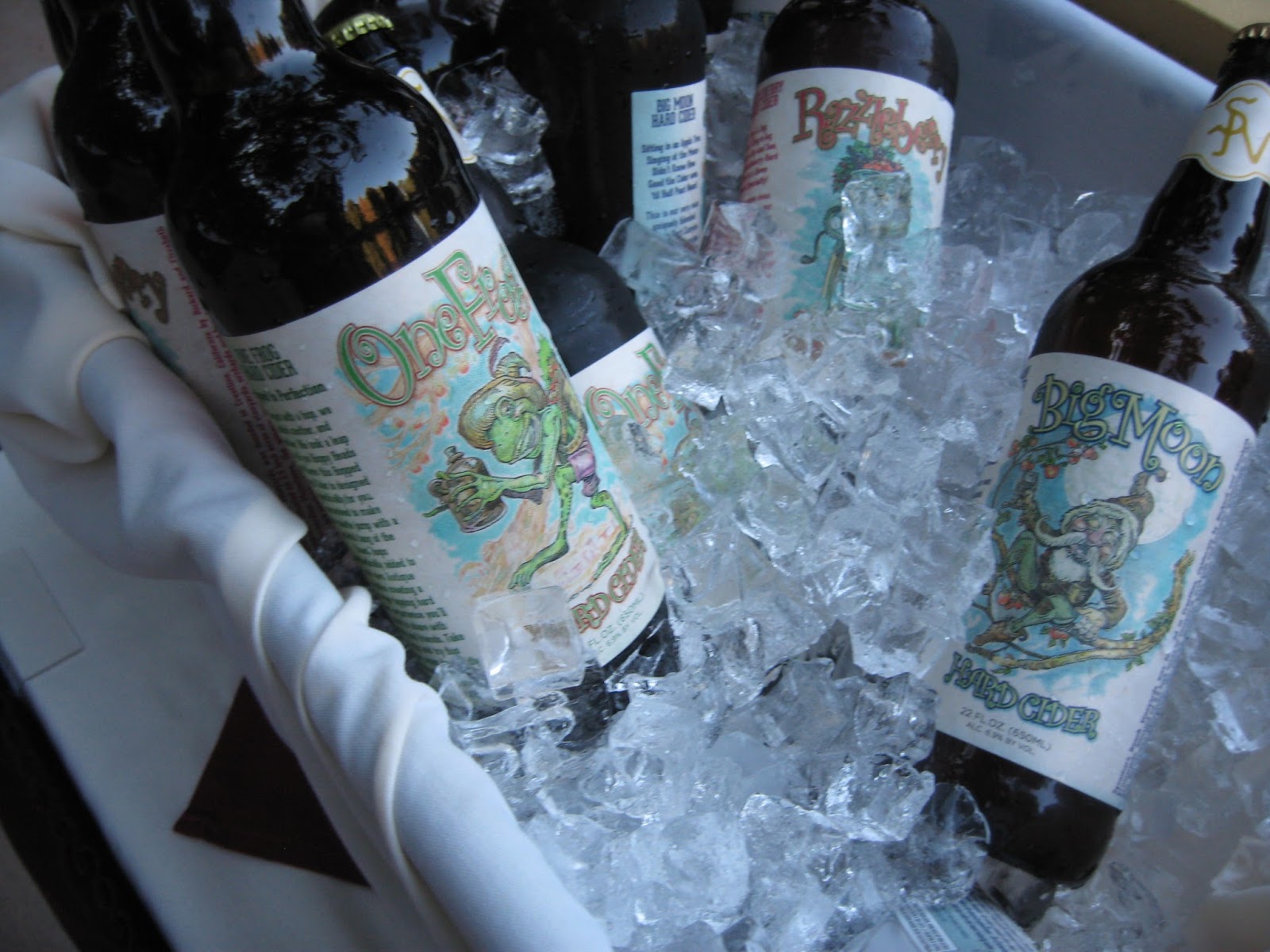
At 6:30, on the evening of the dinner, we gathered outside the Tudor House for the Amuse-Bouche. This course was a delicately seared albacore and red snapper tataki, enveloped around baby herbs atop handmade wonton drizzled in a kumquat ponzu, finished with flavored tobiko. This was paired with the Big Moon Hard Apple Cider. This was one of my favorite pairings of the evening, and a great way to start things off. The kumquat ponzu really worked well with the tartness of the apple cider. The effervescence of the cider awakened the palate, and prepared us for the coming courses.

We next moved inside. The historic Tudor House was set for four couples at each table. A large screen above the performance stage, had a slide show highlighting Sycamore Ranch. We had a small crowd of only about 45 people, but that wasn’t too bad, considering the entire event was put together in less than three weeks.

Our first sit down course was “brown butter pan-seared scallops, fixed upon a Meyer lemon Marcona almond pesto, dotted with cilantro coulis and feathered parsnip chips”. This was paired with the 2014 Sycamore Ranch Rousanne. This white wine has a certain richness to it, with honey and pear notes. The acidity of the wine was matched with the acidity of the Meyer lemon pesto. The pesto itself was not only Meyer lemon, but Marcona almonds. This added a richness that mirrored the wine.

The next course was “roasted organic raised quail and golden beet salad on a bed of wilted tatsoi, graciously dressed with raspberry white balsamic vinaigrette”. This was paired with the 2014 Sycamore Ranch Grenache.  This is a very nice Grenache, with notes of raspberry, strawberry, cherry and white pepper. For many, this was their favorite pairing of the evening. I am not a big beet fan, so for me, they over-powered the wine.

The third course (or fourth depending on how you count) was a Moroccan carrot ginger veloute, dolloped with crème fraiche”. This was my favorite pairing of the evening, being served with the 2014 Sycamore Ranch Rhone Ranger. When a pairing comes together, the food changes the taste of the wine, pulling out flavor notes that weren’t there without the food. This course did that. The ginger and carrot greens made the fruit pop in this wine. For me, this was the best pairing of the night.

After a palate cleanser of apricot lemon sorbet, we moved on to the main course of a “richly marinated, then flash seared venison tenderloin, nested against a forest mushroom risotto, aged parmesan Reggiano, bathed in a luxurious fig and wine reduction”. This course was served with the 2013 Sycamore Ranch Cabernet Sauvignon. What can I say? Cabernet and venison…they just go together. Add to that Parmesan and figs, and you have a rich course.

We ended the evening with “the deepest darkest Belgium flourless chocolate cake, draped in a violet lavender ganache”. This was paired with the 2014 Sycamore Ranch Primitivo.  This was a challenging pairing. Since Sycamore Ranch does not make a dessert wine, and we needed to end the evening with a dessert…the options were limited. The Primitivo is probably their most fruit forward wine variety, but it is not sweet. In this case, the dessert was sweet, and made the wine seem a bit flat. The ganache, with its’ flowery notes did play off similar notes in the wine. Individually, both were delicious.

This was a fun evening of experimenting with wine and food. Learning what works and what doesn’t, and to see how a chef interprets the wine, to create an experience for the participants. At the end of the evening, the owner of the Tudor House was encouraged to try this again, and I made some recommendations of wineries to try. That means more wine pairing notes in the future.

Chilean Dinner and Wine Pairing


Every few months, we get together with friends and put together a gourmet dinner, based on a country, or cuisine, chosen by the host. This time around, it was my turn to host, and since my wife and I recently spent a few weeks in Chile (trip recap here), we decided to give Chilean Cuisine a go.

Since Chile is located in South America, most people would expect something similar to Mexican food, but you would be wrong.  There is a strong influence from traditional Spanish cuisine, but it is mixed with local ingredients, and more importantly, the influences of European cuisines, particularly from Germany, Italy and France. When we traveled to Chile, we experienced fresh fruits and vegetable, an array of seafood and meats. 

Chile and Peru have a long running argument over who is responsible for the potato. I will stay out of the argument, but will attest to the prevalence of the potato, particularly in the south around Chiloe. In the north, we experienced quinoa in multiple forms, but the most unusual was puffed quinoa. Corn, known as “choclo” was also abundant.

With the extended shoreline of Chile, seafood was found everywhere. Salmon farms in the Lake and Patagonia districts are very common. Hake was a particularly common fish in restaurants, but rarely found in my local grocery stores. Lamb cooked on a rack, set up around an open fire pit was a memorable tasting experience.

At almost every meal, we were served local “street bread” known as Pan Amasado. I would liken it to hard tack. It was a small, often tasteless roll or biscuit, always indented with the tines of a fork on top. The bread was served with a form of salsa, known as Pebre, and sometimes with as many as three different dipping or spreading sauces.

The goal for this dinner was to create a menu that represented the different regions of Chile. We incorporated all the main ingredients and searched for recipes in a number of Chilean cookbooks. In a few cases, the herbs or proteins were not to be found, or required some searching. But, what resulted was one of our better dinner/wine pairing experiences. And, the total cost (including wine) was only $50/person!

The first course was an appetizer course of seafood items: Merluza Rellena con Pimientos y Coulis de Ceboletta (Hake filled with Piquillo peppers with scallion coulis); and Salmon ahumado en tazas de pepino (Smoked salmon in cucumber cups). Hake was nowhere to be found, so it was substituted with Talapia. This was a wonderfully light opening dish that was paired with the 2013 Veramonte Sauvignon Blanc. The couple who made this dish smoked their own salmon and were able to source piquillo peppers for the dish. The wine had a crisp acidity to it, with fruit and mineral notes. It was a nice pairing, particularly with the smoked salmon dish.

Our second course consisted of a traditional ensalada (salad) course: Ensalada a la Chilena (Tomato and sweet onion salad) along with Humitas de Choclo (Corn tamales). For this course, we paired with the 2012 Bodegas Re "Chardonnoir". The salad was pretty standard, but the Humitas required some tamale making skills, as well as experimenting with the consistency of the filling. The couple who were responsible for this course watched a few youtube.com videos to hone their assembly techniques. Additionally, they were able to find Aji pepper paste at a local Mexican grocery store, to keep this dish authentic. The wine pairing was interesting, in that the wine was a blend of Chardonnay and Pinot Noir (not unusual for sparkling wine, but this was a still wine).  It had a pink/orange hue to it, and was fairly high in acid, and medium body.  On the nose, there were aromas of stone fruit, tangerine, and minerals. Again, a very nice pairing.

The main course was my responsibility, as the host. Since I don’t have an open pit fire, I resorted to a barbecue to make Cordero a la Parilla con Merquen y salsa menta (Grilled Merquen Lamb skewers with mint salsa). With this, I served Papas Rostizadas (roasted  multi-colored fingerling potatoes). The lamb marinated for about two hours in a yogurt and merquen  sauce. I was able to find the traditional Merquen pepper mix online, and it is worth finding. The lamb was put on skewers alternating with peaches and bay leaves, and slowly grilled, then served with a mint salsa. The fingerling potatoes were simply roasted with garlic and rosemary. With this course, I had two different red wines (I bought both while in Chile): 2011 Errazuriz Don Maximiano and 2008 Casa Silva Carménère Microterroir. Both wines are wonderful examples of what Chile can do. The Errazuriz was their founder’s reserve, and is mainly Cabernet Sauvignon, and has the typical Cab notes you would expect: cassis, currant black pepper, and clove, along with firm tannins. In hindsight, I wish I had held this longer, as I think it was still too young. The Carménère, on the other hand was perfect with the lamb. It was a powerful wine with sweet soft tannins. On the nose, black cherry and spice, with a long finish.

The final course was a dessert course, and this couple had more of a challenge, as the recipe really didn’t exist.  We had Tarta de Fruta con Quinoa soplada (Fruit tart with puffed Quinoa) along with Helado de rica-rica (rica-rica ice cream). After some searching, we found puffed quinoa to make the tart crust. The crust was then lined with a layer of chocolate, and filled with custard and fruit. The tart was served with “rica-rica” ice cream. I put the “rica-rica” in quotation marks, because it is impossible to find this herb outside of Chile (if anyone finds it, let me know where). We tried to recreate the flavor of rica-rica by combining rosemary, mint, sage and lemon zest. An unusual ice cream flavor, but it worked. With this course, we made Vaina, a blended drink consisting of Ruby Port, Cognac, Crème de Cacao, eggs, powdered sugar and ice, then topped with cinnamon. These go down too smoothly, so be careful!

There you have it, a four course Chilean dinner, including wine, for only $50/person. And, a fun evening with friends and fine food, made with your own hands. If you want any of the recipes, let me know in the comments section below.