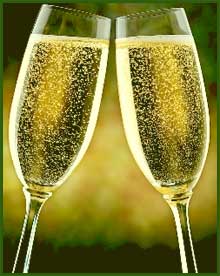
Showing posts with label Sparkling wine. Show all posts

Dinner in South Africa...or was it?


It’s a new year, and what better way to kick it off, than to gather a group of friends, and indulge in the cuisine of South Africa. Followers of this blog know that about every three months, we gather a group together, do some research on a regional cuisine, then create a dinner and wine pairing.

“Cuisine of South Africa” you say? What exactly is that?  To say the least, South Africa has a variety of cultural influences. There are the indigenous people, who would relish a dinner that started with fried caterpillars, and had a main course of crocodile. But, most of the modern cookery emerged through varies waves of colonization from Europe, and the cuisine of their slaves/servants. The Dutch East India Company had a huge influence, as they increased the trade between South Africa, Europe, and India. The slaves came from the east and worked mainly as farmers or fishermen. They brought with them various spices that added flavor to commonly bland Dutch and English dishes.

This night, we chose to focus on the cuisine of the Cape Malay people (slave/servant). The foods have many characteristics of Indonesian and Indian cuisine. Many of the foods are crosses of Malay and European cuisine. Curry, raisins, and multiple spice blends found their way into all dishes, with the exception of dessert. The challenge for pairing wine was to determine the dominant flavor profile for each dish, and choose the appropriate wine. And, since the wines had to come from South Africa, the challenge was complicated….there are limited suppliers of South African wine in our area. The only choice was to purchase wines online, and choose based on winemaker profile notes.

Our first course was a fried dish, known as Samoosas.  These are traditionally an Indian snack of potatoes, meat and peas, wrapped in dough, and fried.  Our version took a little more modern approach, in that we used phyllo dough, and baked the triangle-shaped pouches. There were no less than 14 spices blended with the beef, onion and garlic mixture. We served this with a dollop of Major Grey Chutney. My first pairing thought was a sparkling wine, due to being fried (even though we baked them). I wanted something heavier, to hold up to the beef and spices, and I wanted a slight amount of residual sugar to hold up to the spice, and the sweetness of the chutney. Ultimately, I went with Solms-Delta - 'Cape Jazz' Sparkling Shiraz NV.

For our second course, and first sit down meal of the evening, we had a South African Butternut soup. This simple soup recipe is highlighted by the sweetness of the butternut squash, the hint of heat from the chili pepper, and the richness of cream (which was artistically added to the top of the soup prior to serving). I could have gone in all types of directions with the wine for this course. Again, the focus was to stay within the region for the wine, which many left Sauvignon Blanc, Chenin Blanc (known as “Steen”) Chardonnay, and Riesling. Due to the body of the dish, and went with something a little heavier, and chose Muratie - Isabella Chardonnay 2012. This Chardonnay had a nice creamy texture that worked nicely with the soup course.

For our main course, our hosts prepared Bobotie (a South African version of Shepherd's pie). Bobotie is like meatloaf with raisins and with a baked egg and cream topping. This was served with yellow rice, a cucumber-zucchini salad, and a side of mango chutney. Talk about filling! The fresh salad and lightly spiced yellow rice were a nice accompaniment to the heavy meat course. For the pairing, my immediate thought was to go with the local specialty: Pinotage. But then again, a nice Syrah could do well too. The compromise….have two wines available for the course. I chose the Diemersfontein 2012 Reserve Pinotage from Wellington, and the second wine was De Trafford 2007 Blueprint Shiraz. After trying both wines, the wine of choice for this meal was definitely the Pinotage. This classic South African grape is a cross between Pinot Noir and Cinsault. It has become one of the signature grapes of South Africa.

Our final course (not that we had much room left) was a milk tart. The pressed flour crust was rich, and the sweet milk, wasn’t overly sweet. After my last blog, I had to find the other dessert wine from Constancia. I had already found the Klein Constancia "Vin de Constance", for my blog, so the challenge was to find the Groot Constantia Grand Constance for this dinner. I was able to locate a 2010 vintage (375ml bottle), which cost a whopping $58 (before taxes and shipping). The eight of us finished this bottle off!

In case you are wondering, I was able to find a nice selection of South African wines online, through www.cape-ardor.com. Some of the required spice mixtures were also not available in our area, so with a little bit of research, we were able to grind our own spices to create the needed blend.
As with all our wine pairing dinners, the idea is to have fun, learn about new cuisines and cooking techniques, and share with friends. I hope this quick recap will inspire you to create your own “gourmet tasting group” and share your experiences. Bon Apetit!

Prosecco


Wow, what a busy two weeks. Between my son’s college graduation and my 30th wedding anniversary, I haven’t had time to do much writing. All that celebrating has me a bit behind in my wine writing. 

Speaking of celebrating, I think most will agree that Champagne is usually on order for big events. But what if you don’t want to spend that kind of money? There is always Cava, or Cremant, but I have found that a good Prosecco seems to make everyone happy. It is reasonably priced, and most are well made, and refreshing.

Prosecco is Italy's answer to Champagne. It is made primarily in the district of Valdobbiadene, in the Veneto region.  Unlike other wines in Italy, Prosecco is actually the name of the grape that is used to make the sparkling wine (probably because calling it “Valdobbiadene” would be too much of a mouthful). While the grape was originally known as Prosecco, it is now called Glera. The best examples are made from 100% Glera, but other varieties such as Trevigiana, Verdiso, Perera,  and Bianchetta are allowed in the blend.

Prosecco differs from Champagne in a number of areas. First, it is obviously not made in France, and second, it uses different grapes. But, the biggest difference is in the production method. In a previous blog, I wrote about the Champagne Method. Prosecco is made using the “Charmat” method. Since the grapes used in Prosecco are prized for their delicate flavors and aromas, aging the wine in the Champagne method would ruin the freshness that is so evident in these wines.

The Charmat method consists of a secondary fermentation that takes place in stainless steel tanks, rather than in the bottle (as is the case for Champagne). First, a still wine made from the grapes, and then that wine is put into a pressurized steel tank with specific amounts of sugar and yeast. While in the tank, the yeast and sugar react together to make carbon dioxide, which carbonates the wine. This makes the wine less expensive to produce. Fermenting the wine in steel tanks instead of in the bottle preserves the taste of the grapes, which gives the wine its fresh, fruity flavor, but also means that can't be aged for very long. The rules for the DOCG Prosecco Valdobbiadene also allow the use of the Classic Method (secondary fermentation in the bottle). Unfortunately, the Charmat method is also used to make some pretty bad sparkling wines, so its reputation has been suspect. On the positive side, Prosecco has really improved its reputation with the method, since it started producing dry or even extra dry wines, rather than the sweet wines that were commonly associated with Asti, which is produced in the Piedmont region.

Compared to other sparkling wines, Prosecco is fairly low in alcohol (only around 11 to 12 percent). This lower alcohol makes it perfect for most any occasion. Traditionally, Prosecco was made to cleanse the palate from afternoon espresso, in preparation of dinner. Outside of Italy, it is most often consumed as an aperitif. As with other sparkling wines, Prosecco should be served chilled,  at around 50 degrees Fahrenheit.

The flavor or Prosecco is typically aromatic and crisp. Most notable is the lemony-citrus aromas, and crisp green apple. Secondary aromas of almonds, pear, peach and apricot are also common. The color is usually light-straw, and the bubbles are small, but not as fine as Champagne. Overall, Prosecco is meant to be a fresh and light sparkling wine that is enjoyed within a year or two of the vintage. However, the best Proseccos can age for several years.

For what is considered the “best” Prosecco, look for: Prosecco di Conegliano-Valdobbiadene, Prosecco di Conegliano or Prosecco di Valdobbiadene.  Also the sub-denomination Cartizze (indicating they were grown on the slopes around the village of San Pietro di Barbozza). These are known for their drier, more mineral characteristics. 

If you are looking to pair your Prosecco with food, the crispness of the wine pairs nicely with seafood. The sparkling nature of the wine works as a palate cleanser and is perfect for fried foods, or mouth-coating foods. Think fried calamari, pasta dishes, salads, and again, seafood. Prosciutto wrapped melon is a classic pairing. The refreshing nature of Prosecco also makes is a great summer wine. 

Prosecco is also popular as a Mimosa ingredient, and is famous as a component of a Bellini.

Easter and Passover Wines


It is Spring time, which for most people in the United States, means spring break, the melting of the snow, and the blooming of daffodils and tulips. For many at this time of year Passover and Easter are are the focus of not only religious renewal, but also family traditions. The tradition of wine with this time of year can be traced back to the last supper (during Passover) where Christ broke the bread, and drank the wine from the chalice, which later led to the Eucharist. Wine has a long history with religion.

The traditional Passover meal (Seder) includes unleavened matzoh as a reminder of the haste with which the Israelites fled Egypt, leaving no time for dough to rise and zeroah, a roasted lamb shankbone.

Easter traditions vary more widely, based on family heritage and history. Many families prefer to attend an Easter brunch after church services. These meals can vary widely in the choices, but some of the most common traditions include hot crossed buns, and hard boiled egg dishes. When it comes to dinners, the traditions seem a bit more focused. Two main courses have been garnering most of the attention in the United States: Roast lamb, and Honey-baked Ham.

When it comes to wine pairings for Passover, the choice is much easier than for Easter. The Passover Seder calls for four glasses of wine, which are consumed during the service to represent the four-fold promise of redemption, with a special glass left for Elijah the prophet. The wine should be kosher, which will limit our choices. Since the main course is lamb, the focus should be on heavier red wines, such as Cabernet Sauvignon, and Syrah. These are classic pairings for lamb dishes, particularly roasted lamb. While I must admit, my tastings of kosher wines are somewhat limited, I can recommend s few that I have tried: Yarden (from Israel) makes a nice Cabernet Sauvignon, and tow California winemakers: Baron Herzog and Covenant are making both Cabernet Sauvignon and Syrah. Stay away from the Manischewitz, unless you like the taste of concord grapes in your wine glass.

As mentioned, the Easter brunch offers the biggest options, and depends on what the focus is. Egg dishes present their own challenges, since egg yolk coats the mouth. With these types of dishes, we need a palate cleansing wine. Something higher in acid would be ideal, and even better would be a little bubble action to help scrub away the egg film. For this reason, sparkling wines are the ideal choice. Depending on the mix of items offered at brunch, you'll next need to decide if you want a fruitier, fuller wine (Blanc de Noirs) or something with a little more finesse (Blanc de blancs). An more versatile choice might even be a rose sparkling wine. The nice thing about sparkling wines, is that you don't have to break the bank, and purchase the best cuvée de prestige. There are some very nice, reasonably priced sparkling wines. If you can find it, one of the best values is Gruet (from New Mexico, of all places). Even the inexpensive (around $5) Schloss Biebrich Sekt from Trader Joe's is a decent entry level sparkler, and perfect if you are going to also make Mimosas.

As for the Easter dinner, I have already mentioned some choices that work for lamb. The classic pairings are Cabernet Sauvignon, and Syrah. I tend to prefer a bit lower alcohol level with my wines, so I steer towards some of the cooler growing regions, where the grapes' sugar levels don't get so high.

Ham offers a whole bunch of options, and depends on the style of ham you are serving. The classic honey-baked ham is on the sweeter side, so I would go with a dry Riesling. I prefer Alsatian Riesling from France, or German Spatslese with lower sugar levels (read my blog about German wines to help determine sweetness). If you are more of a red drinker, Look for Pinot Noir or even a village level Beaujolais (Gamay). A dry Rose would work nice too.

Other types of ham open the door a little further. Clove studded ham adds some spice that might work nicely with a Gewurztraminer. Ham with pineapple should work well with Chardonnay. Again, if you prefer red wines, try a Rioja (Tempranillo) or even a fruity Zinfandel. And, as stated before, a dry Rose will satisfy both white and red drinkers.

As with all holidays, enjoy your gatherings. Make them special with the proper pairings. And, remember the reason for the season. Happy Easter and Pesach same'ach.


Sparkling Wine Production

The popping cork. Those crazy bubbles. Celebrations. When thinking in terms of wine, you probably just thought about Champagne. But, not all sparkling wines are Champagne, and not all sparkling wines are made the same way. Have you ever given any thought to why some bottles of sparkling wine sell for a few dollars, and others sell for a few hundred? Then this article is for you.

There have been extensive books written on the history of sparkling wine, particularly the most famous of them all: Champagne. This article is not meant to be an in depth investigation of the processes involved, but a more simplified explanation to help you understand what you are getting for your money.

First, let's clear up the difference between Champagne, and other sparkling wine. Champagne can only be produced in the Champagne region of France. It is a regionally protected name. It can only be produced one way, and can only use three traditional grapes: Chardonnay, Pinot Noir, and Pinot Meunier. (There are four other grape varieties that are permitted, mostly for historical reasons, but they are rarely used).  Sparkling wines outside of the Champagne region go by many other names, but none of them are Champagne

There are four different methods to making Sparkling wine: Traditional Method (better known as Méthode Champenoise); Transfer Method, Charmat Method (also known as the Tank Method), and lastly (and lowly) the Injection Method.

Remuage
Let's start with the Traditional Method. Once you understand all the steps involved in making this style of sparkling wine, you'll understand why you pay more for it. First, the grapes are gently pressed to avoid any color extraction from the skins. Next the juice is fermented (usually in stainless steel) to dryness. The resulting wine is pretty acidic, and wouldn't make a great tasting wine. Next, the different wines are blended to create the "house style". This step is known as "Assemblage". As a side note, this is really what Dom Perignon is known for. (He is not the creator of Sparkling wine. But, the blind monk had a great nose, and was a master at blending wines.)....Back to our steps...after creating the desired blend, the wine is put into bottle, and a combination of wine, yeast, and sugar (known as "liqueur de tirage") is added, and the bottle is capped with a crown cap (just like those found on beer bottles). The addition of this "liqeuer de tirage" triggers a second fermentation inside the bottle. Since it is in an enclosed container, there is nowhere for the carbon dioxide gas to escape, so it is reabsorbed (or trapped) in the wine. Once this second fermentation is complete, the dead yeast cells (known as "lees") must be removed from the bottle. The process of removing this sediment is known as Remuage (or Riddling). The bottles are gradually shaken and tilted over time to get all the sediment into the neck of the bottle. This was traditionally done by hand (and developed by that famous widow Veuve Clicquot...or at least her workers), but now there are machines that can do the job. Once the sediment is in the neck of the bottle. The neck is dipped into an ice bath to solidify the sediment, then the crown cap is removed, and the pressure inside the bottle ejects the sediment plug, leaving a clear wine inside. This process is known as "disgorgement". The bottle is then topped off with a final dosage known as "liqeuer d' expedition" (a mixture of wine and sugar that will determine the final sweetness level of the finished product), then corked, caged, and labeled.

Madame Veuve Clicquot
Wines made in this style are the most expensive. All Champagne is made in the traditional method. In France, all sparkling wine, made outside the Champagne region and in this traditional method, are known as Cremant. The Spanish Sparkling wine, known as Cava, is also made in the traditional method, but using some different grapes: Macabeo, Xarel-lo, Parellada, along with Chardonnay and Pinot Noir. Italy makes Franciacorta in the traditional method. Sparkling wines throughout the world are made in this traditional way, and usually will tell you that on the label. The result is the finest, delicate bubbles, and should come to you in the bottle that the second fermentation actually took place in.

The second way to produce a sparkling wine is the transfer method. All the steps are the same as traditional method, up to remuage. Instead of this time consuming (and expensive) process, the wine is emptied from the bottle (or transferred) to a pressurized tank, where the wine is separated from the sediment in bulk. The dosage is added, in bulk, and then bottled under pressure. The final result is fairly indistinguishable (much to the chagrin of the French) from the traditional method.

Montagne De Reims, Champagne, France
In the Charmat (or tank) Method, both the first and second fermentation are done in a pressurized tank. This process is fast, cheap, and not very labor intensive. The resulting bubbles are less refined, and the flavor from the sitting on the lees is less apparent.  Probably some of the best known wines in this style are Prosecco, Asti and Moscato d'Asti from Italy, and Sekt from Germany.

The last method is the cheapest method, and that is through direct injection of the carbon dioxide into the wine, just as you would add carbonation to a soda. The resulting wine produces large bubbles that dissipate quickly.

Some tips on understanding the labels:

Extra Brut = bone dry
Brut = dry
Extra Sec = medium dry
Sec = medium sweet
Demi sec = sweet
Doux = Very sweet
Blanc de Blancs = white wine from white grapes (best aging capacity)
Blanc de Noirs = white wine from red grapes (more full bodied than above)
Cuvee de Prestige = usually the best wine the house has to offer

Most Sparkling wines are non-vintage, meaning they are blend of years, but probably mostly from the current harvest. Reserve wines from previous years are kept at low temperatures, and added to the current harvest to maintain a consistent house blend flavor profile. Vintage Champagne is only declared in the best years, and require at least 3 years of aging.

For tips on serving your Sparkling wine, check out my earlier blog here.

So what are some of your favorite sparkling wines?