Showing posts with label Chile. Show all posts

Chilean Dinner and Wine Pairing


Every few months, we get together with friends and put together a gourmet dinner, based on a country, or cuisine, chosen by the host. This time around, it was my turn to host, and since my wife and I recently spent a few weeks in Chile (trip recap here), we decided to give Chilean Cuisine a go.

Since Chile is located in South America, most people would expect something similar to Mexican food, but you would be wrong.  There is a strong influence from traditional Spanish cuisine, but it is mixed with local ingredients, and more importantly, the influences of European cuisines, particularly from Germany, Italy and France. When we traveled to Chile, we experienced fresh fruits and vegetable, an array of seafood and meats. 

Chile and Peru have a long running argument over who is responsible for the potato. I will stay out of the argument, but will attest to the prevalence of the potato, particularly in the south around Chiloe. In the north, we experienced quinoa in multiple forms, but the most unusual was puffed quinoa. Corn, known as “choclo” was also abundant.

With the extended shoreline of Chile, seafood was found everywhere. Salmon farms in the Lake and Patagonia districts are very common. Hake was a particularly common fish in restaurants, but rarely found in my local grocery stores. Lamb cooked on a rack, set up around an open fire pit was a memorable tasting experience.

At almost every meal, we were served local “street bread” known as Pan Amasado. I would liken it to hard tack. It was a small, often tasteless roll or biscuit, always indented with the tines of a fork on top. The bread was served with a form of salsa, known as Pebre, and sometimes with as many as three different dipping or spreading sauces.

The goal for this dinner was to create a menu that represented the different regions of Chile. We incorporated all the main ingredients and searched for recipes in a number of Chilean cookbooks. In a few cases, the herbs or proteins were not to be found, or required some searching. But, what resulted was one of our better dinner/wine pairing experiences. And, the total cost (including wine) was only $50/person!

The first course was an appetizer course of seafood items: Merluza Rellena con Pimientos y Coulis de Ceboletta (Hake filled with Piquillo peppers with scallion coulis); and Salmon ahumado en tazas de pepino (Smoked salmon in cucumber cups). Hake was nowhere to be found, so it was substituted with Talapia. This was a wonderfully light opening dish that was paired with the 2013 Veramonte Sauvignon Blanc. The couple who made this dish smoked their own salmon and were able to source piquillo peppers for the dish. The wine had a crisp acidity to it, with fruit and mineral notes. It was a nice pairing, particularly with the smoked salmon dish.

Our second course consisted of a traditional ensalada (salad) course: Ensalada a la Chilena (Tomato and sweet onion salad) along with Humitas de Choclo (Corn tamales). For this course, we paired with the 2012 Bodegas Re "Chardonnoir". The salad was pretty standard, but the Humitas required some tamale making skills, as well as experimenting with the consistency of the filling. The couple who were responsible for this course watched a few youtube.com videos to hone their assembly techniques. Additionally, they were able to find Aji pepper paste at a local Mexican grocery store, to keep this dish authentic. The wine pairing was interesting, in that the wine was a blend of Chardonnay and Pinot Noir (not unusual for sparkling wine, but this was a still wine).  It had a pink/orange hue to it, and was fairly high in acid, and medium body.  On the nose, there were aromas of stone fruit, tangerine, and minerals. Again, a very nice pairing.

The main course was my responsibility, as the host. Since I don’t have an open pit fire, I resorted to a barbecue to make Cordero a la Parilla con Merquen y salsa menta (Grilled Merquen Lamb skewers with mint salsa). With this, I served Papas Rostizadas (roasted  multi-colored fingerling potatoes). The lamb marinated for about two hours in a yogurt and merquen  sauce. I was able to find the traditional Merquen pepper mix online, and it is worth finding. The lamb was put on skewers alternating with peaches and bay leaves, and slowly grilled, then served with a mint salsa. The fingerling potatoes were simply roasted with garlic and rosemary. With this course, I had two different red wines (I bought both while in Chile): 2011 Errazuriz Don Maximiano and 2008 Casa Silva Carménère Microterroir. Both wines are wonderful examples of what Chile can do. The Errazuriz was their founder’s reserve, and is mainly Cabernet Sauvignon, and has the typical Cab notes you would expect: cassis, currant black pepper, and clove, along with firm tannins. In hindsight, I wish I had held this longer, as I think it was still too young. The Carménère, on the other hand was perfect with the lamb. It was a powerful wine with sweet soft tannins. On the nose, black cherry and spice, with a long finish.

The final course was a dessert course, and this couple had more of a challenge, as the recipe really didn’t exist.  We had Tarta de Fruta con Quinoa soplada (Fruit tart with puffed Quinoa) along with Helado de rica-rica (rica-rica ice cream). After some searching, we found puffed quinoa to make the tart crust. The crust was then lined with a layer of chocolate, and filled with custard and fruit. The tart was served with “rica-rica” ice cream. I put the “rica-rica” in quotation marks, because it is impossible to find this herb outside of Chile (if anyone finds it, let me know where). We tried to recreate the flavor of rica-rica by combining rosemary, mint, sage and lemon zest. An unusual ice cream flavor, but it worked. With this course, we made Vaina, a blended drink consisting of Ruby Port, Cognac, Crème de Cacao, eggs, powdered sugar and ice, then topped with cinnamon. These go down too smoothly, so be careful!

There you have it, a four course Chilean dinner, including wine, for only $50/person. And, a fun evening with friends and fine food, made with your own hands. If you want any of the recipes, let me know in the comments section below.

A Visit to Chile - Part Three - Wine Country


The final segment of our 15 day trip to Chile brought all the pieces together. To understand why Chilean wine is what it is, my previous two article help to figure it out. The first segment of our trip took us to the south of Chile, into the Lake and Patagonia regions. The south has heavy forest, glaciers, fjords and thousands of islands. The second segment of our trip was to the far north, into the Atacama desert…one of the driest places on earth. As we flew from Atacama to Santiago (in the center of the country) we followed along the backbone of the Andes in the east, bordering Argentina. We passed the highest mountain outside of Asia, Aconcagua (22,837ft). On the west is the Pacific Ocean.

Mt Aconcagua
The wine growing regions of Chile are located in the numerous valleys located between the desert, Andes, ocean, and cold of the south. These barriers, in every direction, have prevented diseases found in other parts of the world, from reaching the vineyards of Chile. Most of the grape vines in Chile are ungrafted, since Phylloxera is not present.

Grapes arrived in Chile with the Spaniards, in the middle of the 16th Century. But it wasn’t until the 1850’s that French vine cuttings made their way to Chile, including the grape that has become Chile’s signature grape: Carmenere.
Cabernet Franc

The last five days in Chile had us visiting four of the fourteen wine growing valleys, three of the oldest wineries in Chile, a bicycle tour of Santiago, beach communities, great meals, and lots of discussions of history, politics and wishing we could extend our stay.

Santiago, Chile
Santiago is a metropolitan city. The highway system rivals any large city in the United States. Metro lines connect the city. The financial district has the tallest building in South America. Our stay at the Marriott Renaissance hotel, was the first place we had internet in the room. Across the highway from the hotel was a modern mall with all the high end retail stores, as well as numerous American restaurants.

The day we arrived the temperature was in the mid 90’s. Chile has been suffering through a drought similar to California, and the addition of heat made the air hazy.

One of our finest meals was actually at the Catae Restaurant in the hotel. The grilled lamb with mint risotto paired with Morande Cabernet Franc, was something to remember. 

Casablanca Valley
On Tuesday we grabbed a quick breakfast at the hotel. The buffet was similar to other breakfasts throughout the trip. Those same runny eggs keep showing up. The selection of fruits included “tuna”, which is actually prickly pear cactus. The taste is something like a sweet cucumber with a lot of seeds. We met our guide and driver and headed northwest towards Casablanca Valley. The valley is a small bowl shaped valley with a highway running down the middle. There are currently 13 wineries in Casablanca Valley. The vineyards look similar to vineyards in other growing regions, except the rows and rows of pergola trained grape vines, which are actually only used for table grapes. All the vineyards are on the lower parts of the valley floor, and occasionally part way of the sides of the valley. The upper sides of the valley hills are planted with avocado trees. The vineyards receive their water through channels feeding from the streams and rivers that run out of the Andes. Many of these water channels were built by the Incas, and later by new transplants in the 1800’s.

Matetic Winery, Rosario Valley District
Our first stop brought us back down south a bit, to the northern end of the San Antonio Valley. The Matetic Winery is a biodynamic winery in the small district of Rosario Valley. Harvest had started on the Sauvignon Blanc, and pickers were in the vineyard in the middle of the day. A corral of Alpaca was located next to the vineyard. The Alpaca are used during the dormant season for weed maintenance. Once the fruit ripens, the Alpaca are corralled and chickens are released into the vineyard for insect control. Typically birds are one of the largest pests during harvest time, but there are so many hawks and eagles in the area, birds are not a worry here.

Valparaiso
After a long lunch (lunches in Chile always seem to go 1 to 1/1/2 hours) at the Matetic Vineyard, we headed to the coastal town of Vina del Mar, then over to the World Heritage section of Valparaiso. We walked from Merry to Concepcion Hill, admiring the street art, small cafes and hostels. This Bohemian section of town reminded me of San Francisco in the 60’s.

Wednesday was spent touring downtown Santiago by bicycle. Isabel was the daughter of the owner at www.biketours.cl. For 4 ½ hours we visited monuments, buildings, and unique communities around the capitol. One of stops was the original location of Concha y Toro, which is now a freedom of the press square. After the ride, we visited the Pueblito Los Dominicos, a commune of local artisans, where we found jewelry, paintings, textiles, and bird shops. We found some great prices on Lapis and Chilean silver. After massages at the hotel, we finished the day at the top of the hotel with ceviche in the outdoor bar, and comparing Chilean Pisco with Peruvian Pisco.

Tasting with Mauro von Siebenthal
Thursday morning, we left the hotel just in time to hit the morning traffic, and headed to the Aconcagua Valley. Aconcagua Valley is a small wine growing region about 1 ½ hours north of Santiago. There are only six wineries in the valley, which is fed by the Acongagua river. Our first stop was at the Von Siebenthal Winery. We were the only people at the winery, and met with the owner, Mauro von Siebenthal. The vines are cultivated using organic farming principles and the yield is drastically reduced to intensify the aroma of the grapes. We barrel tasted his Petite Verdot and Carmenere. All his wines take two years in oak and two years in bottle, before release….and it is worth the wait. I was fortunate enough to be able to purchase some wine from the owner’s personal wine library. The wines are seductive, and are a fine example of what a niche winemaker can do. If you see Von Siebenthal wines, buy them!

Errázuriz "icon" building
Our next stop was at the historic Viña Errázuriz winery. Where Von Siebenthal was small, Errazuriz (which is just down the road) is huge. We toured the original winery, built in 1870 by Don Maximiano, then toured the new modern facility used exclusively for their “icon” wines. One of the things we noticed about wineries in Chile, they haven’t figured out the gift shop opportunities like those in the United States. Their tastings usually include only three or four wines, and prices are lower if you buy at the winery versus a wine shop (now that is something I’d like to see in the United States). Lunch was at the Caja Los Andes, where we had Churrasco Italiano (a grilled, seasoned beef sandwich with tomatoes, avocados and mayo).

Bocanariz wine pairing dinner
Dinner was at one the top rated restaurants in Santiago: Bocanariz. The wine list contains over 400 Chilean wines. The servers are all sommeliers. The restaurant is not fancy, but is very trendy. The wine pairing menu was the recommendation of our server. He paired each course with wines from their list. We arrived at 9:00 on a Thursday night, and left at 11:00, and the place was still packed.

Cousiño Macul underground cellar
Our final day in Chile was spent in the Maipo Valley, just outside of Santiago. This is a flatland area, that is irrigated by the Maipo River. The first stop was Cousiño Macul. They claim to be the oldest operating winery in Chile, established in 1856, and still run by the original family. The walled vineyard estate is now surrounded by homes, and is one tenth the size it used to be. Located at the foot of the Andes, this historic winery is being surrounded by the expansion of the Santiago suburbs. The winery is a museum of wine history. The original underground cellars are still intact, even after some of the large earthquakes that this area is prone to.

Tesoros de Chile
Lunch was at Tesoros de Chile, where we were the only people in the restaurant. Here we tried a multiple course lunch of traditional Chilean foods. Across the street is the most popular winery in Chile, and most people go there for lunch, and miss this small gem.

Casillero del Diablo cellar
The Concha y Toro Vineyard was founded by Don Melchor de Santiago Concha y Toro in 1883. Conch y Toro is the largest wine producer in Chile, and they operate differently than the other wineries we visited. They have guided tours that leave the central meeting point, every 15 minutes. Tours of the “summer house” were not allowed this day, as there was a shareholders dinner being set up. The guided tour included a tour of the Casillero del Diablo cellar, which included an almost Walt Disney type show including stories about the devil in the cellar. Concha y Toro also had a huge gift shop, which matched the number of people touring the facility.

Vina del Mar
Unfortunately, every trip has to come to an end, and so did ours (but not before a 13 hour flight back to the United States). Luckily, I was able to bring back some great bottles of wine, that are just waiting for the opportune time to open, and plenty of great memories. I hope this series of three blogs has inspired you to visit the country of Chile. I know this won’t be our only trip there!

A Visit to Chile - Part Two - Atacama


Volcano Lincancabur above the Hotel Altiplanco
Last week, I shared the first stop on our trip to Chile. The next segment emphasized the extreme differences that one can experience in the country.

As mentioned last week, we were lucky enough to have won this trip through a contest sponsored by LAN airlines, Skorpio Cruise, ADS Mundo, SouthAmerica.travel and Marmot Outdoor Gear. The contest was called the “Go to Extremes” and versus the previous five days in Patagonia, the Atacama desert was a shock to the system.

Valley of the Moon
We left Puerto Montt, flew to Santiago, then caught another flight to the desert mining town of Calama. From the lush forests, sea life, and islands of the south, we arrived in the barren desert of the north. Looking at Calama, we weren’t too excited about our new locale, but after Harald (our guide for the next four days) picked us up, and started driving towards the desert oasis of San Pedro de Atacama, things changed. We crossed to different mountain ranges, and with each crossing, the Andes became clearer. The terrain changed from plain desert to vibrant colors and canyons. Vicuña and guanaco (both relatives of the llama) began appearing on the side of the road. After a little over an hour driving across the desert, we arrived at the Hotel Altiplanco, in San Pedro. The hotel is a quaint adobe complex sitting at about 8,800 foot elevation, overshadowed by the towering Licancabur volcano in the background.

15,420 feet in the Andes
The next few days, Harald took us to almost every site in the Atacama Desert (request Harald Apablaza as your personal guide – he is the best!). We visited numerous lagoons and salt flats, including Lagunas Piedra (so salty there is no way you can sink). Moon Valley was an interesting stop, with huge sand dunes, box canyons, and deep valleys. Petroglyphs at Hierbas Buenas, multi-colored landscape at Rainbow Valley, a visit to the small indigenous village of Rio Grande, and watching Flamingos at the Atacam Salt Flats were just some of the sites. 

Viscacha
What is interesting is that this desert is one of the driest places on earth, but there is water everywhere. The desert sits at about 8,200 feet, and it was is hot (mid 90’s during mid-day, with cool mornings). The Andes tower 20,000 feet into the sky above the desert floor, and collect the rain and snow. The snow melt filters through underground tunnels and fissures, as well as flows down the mountains. There are channeled canals throughout the towns for irrigation, but in the salt flats, the water comes up through the ground, creating marshes of salt water as well as fresh water (or known locally as sweet water). The bird life is extraordinary, along with wild donkeys, llamas and goats. Again, this is a desert!

Llamas in Rainbow Valley
One of the highlights of our stay was getting up very early, and heading up into the Andes, to visit the Tatio Geysers (highest geysers in the world at over 14,000 feet). Our drive took us over a pass at 4,700 meters (15,420 ft). At this elevation, you wouldn’t expect to see much wildlife, but we saw more in the high altitude, than any other time on our trip. High altitude marshes were teaming with water fowl and llamas, and the rocky outcroppings had the strangest creature I have ever seen…viscacha (something like a cross between a rabbit, rat and chinchilla). After the high altitude temperatures in the 20’s, we stopped at the Puritama hot springs, and their eight pools. Combine high altitude sun and white skin, and sure enough a sunburn was part of the days memories too.

Main street San Pedro de Atacama
So what about the food and drink in this part of Chile? Well, just like the Patagonia region, there are certain things that stand out, but there were also some similarities. Breakfast was the same as in the south, and nothing to write home about. However, we did add a couple new things to our breakfast list: Mate de coca (a tea made from coca leaves, and said to ease “puna”, or altitude sickness). I can honestly say that even though it has coca in it, I didn’t notice anything, but it did taste good. Another new breakfast item was puffed quinoa. Not only did we find this as a breakfast cereal, but also on the breakfast tarts, and something that resembled rice crispy bars (but with quinoa replacing the puffed rice). Quinoa was everywhere, as you would expect, being in the corner of Chile that borders Peru, Bolivia and Argentina.
Chilean Flamingo

Lunches weren’t big, like in the south, which was a good thing, since the heat in the afternoon, really suppressed any idea of eating heavy food. One “lunch” was simply a stop at the ice cream shop in San Pedro for a couple scoops of ice cream. Being adventurous, I tried Chañar ice cream (a nut from a local tree).

rolls with dipping sauce
All but one night, we had dinner at the hotel, as it was included with the stay. Each night the restaurant had a regular menu, but also had a complete dinner with three courses. Each course you could pick one of the two items. Prior to dinner, there was always small garlic rolls on the table, with a  wonderful dipping sauce. In my broken Spanish, I asked for the recipe. I am not sure if I got it right, but was told the sauce contained: pimento (but could be a medium heat pepper), tomato, onion, and cilantro. Blend together, then add enough olive oil to make the consistency similar to aioli, then season with salt.

Allyu Vineyards in Toconau
The wine menu had wines from all over Chile, including a local wine called Allyu. Yes, there is a winery in the Atacama desert. We went to the town of Toconau to check it out. The government is supplying the water to develop this new winery. Unfortunately, I can’t tell you about the wine. While we saw it on the menu at a couple places, no one had it in stock. To top that, whenever I asked about it, I was consistently told that the wine was not good, and told not to order it. It seems the vines are only a couple years old, and they are trying to produce wine from young vines, and not aging the wine. 

Early morning breakfast at Tatio Geysers
Most nights, my drink of choice was Pisco Sour with rica rica. Rica rica is a local herb that grows wild everywhere. It has a very medicinal and herbal taste similar to sage, but is great with Pisco and lemon. Unfortunately, I don’t think you can find this herb in the United States, so your only choice to trust me that it is good, or visit Atacama yourself. Another item of note…the Adobe Restaurant in San Pedro, was the first place we saw ice offered (of course it was in the driest place on earth).

On Monday, we left the hotel early to drive back to Calama for our flight to Santiago, and the final segment of our trip. Check out the third segment of the trip, as you’ll see how the South, North, East and West of Chile, affect the wine regions of Chile.
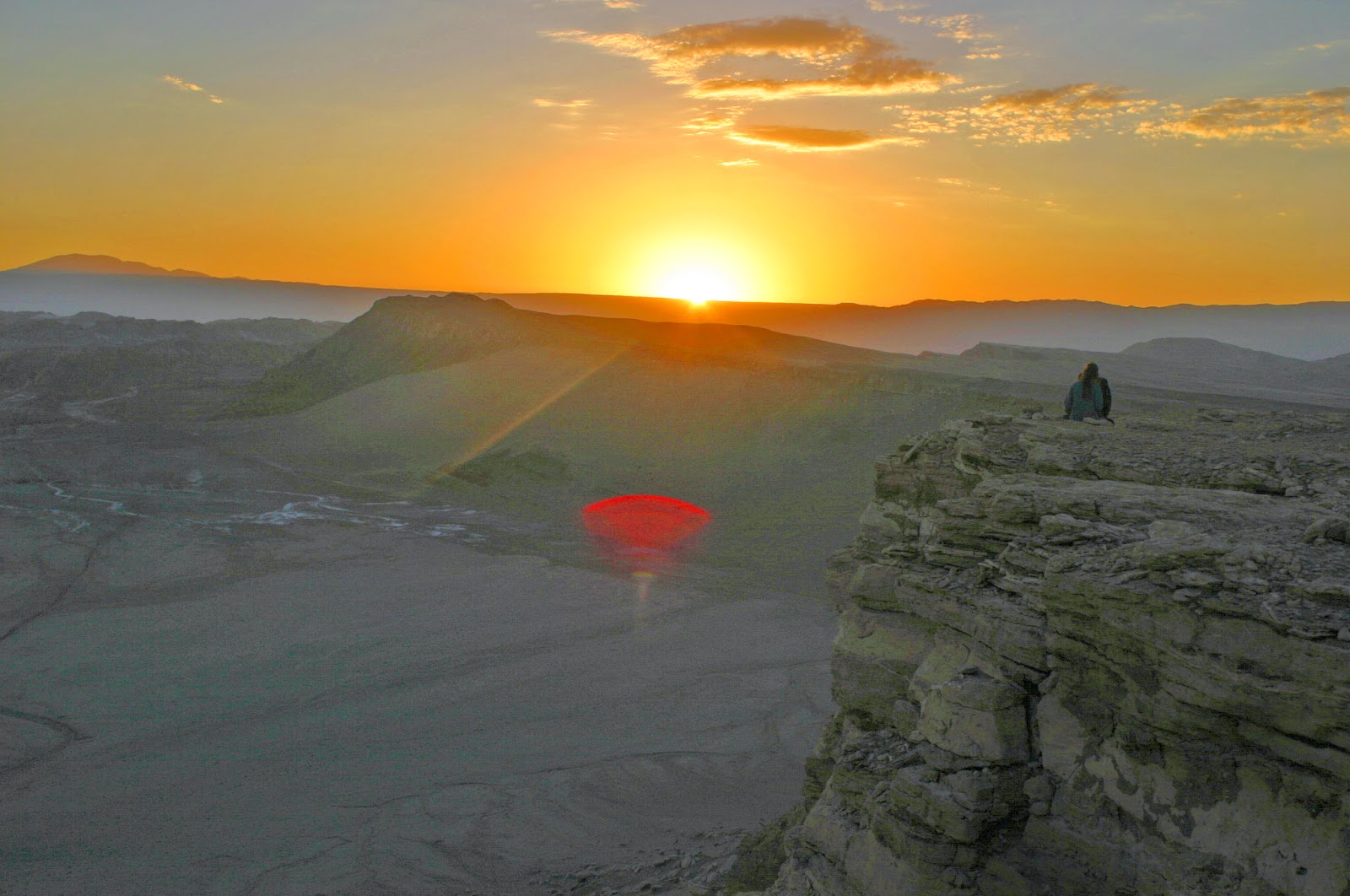
Sunset at Kari Canyon